
2004 Nissan 350Z Engine – Sports Car Performance from 603 Auto Salvage
2004 Nissan 350Z Engine – Sports Car Performance from 603 Auto Salvage Need a **2004 Nissan 350Z engine**? 603 Auto Salvage has you covered with quality used VQ35DE V6 engines
Welcome to 603 Auto Salvage, We Sell Quality Used Auto Parts at Affordable prices.
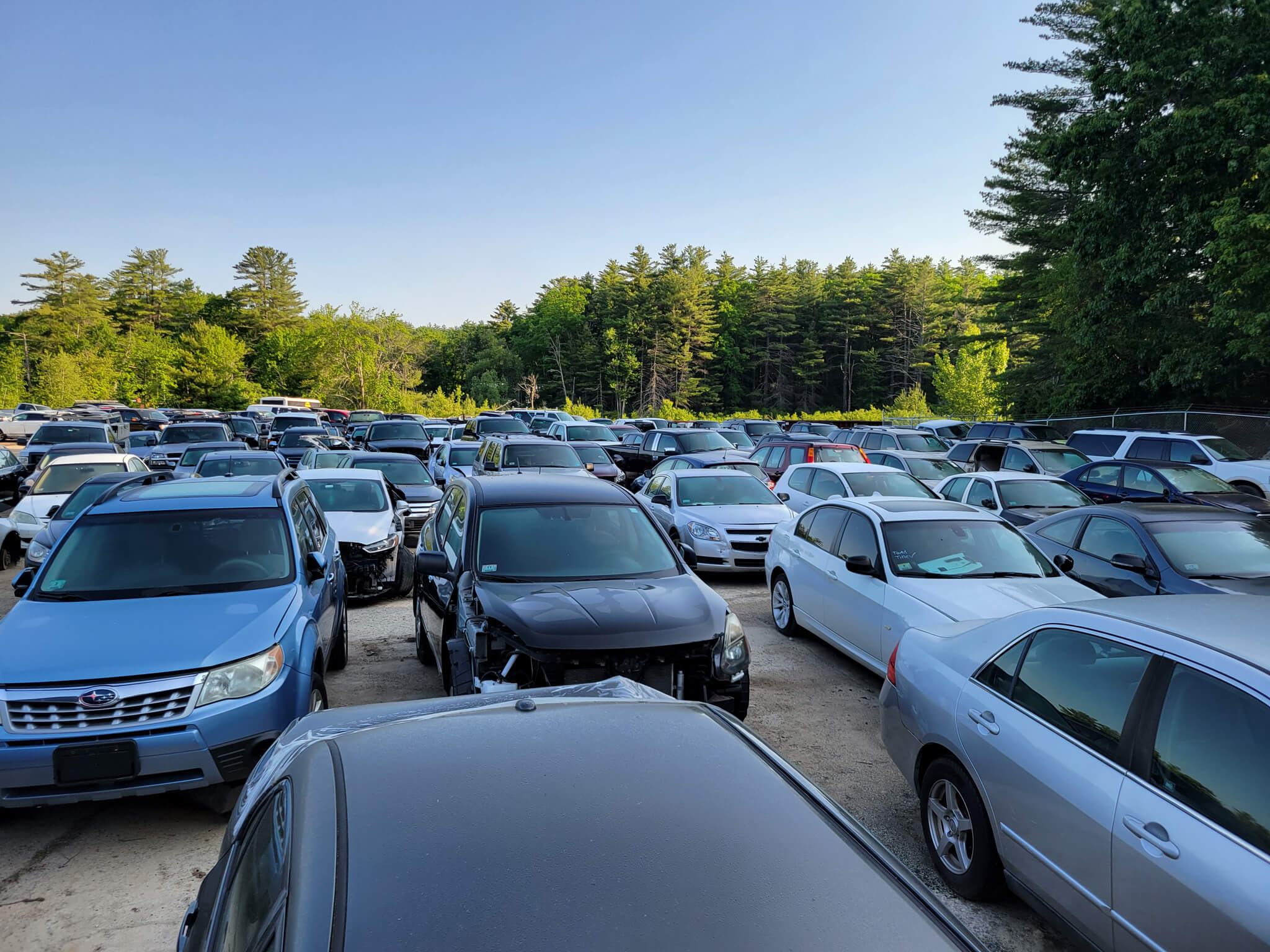
Finding a quality used 4.3 Vortec engine for your Chevy project doesn’t have to break the bank. At 603 Auto Salvage in New Hampshire, we’ve built a reputation for providing tested, reliable Chevy 4.3 motors from S10s, Blazers, Silverados, Astros, and Colorados. Whether you’re dealing with a blown head gasket, timing chain issues, or simply need more power for your build, our inventory of used Chevy V6 engines offers the perfect balance of affordability and proven performance.
The 4.3L Vortec isn’t just another engine – it’s the backbone of countless work trucks, daily drivers, and project vehicles across America. From the compact S10 pickup to the versatile Blazer SUV, this iron-block V6 has powered millions of miles of reliable service. When properly maintained and sourced from reputable salvage yards like 603 Auto Salvage, a used 4.3 Vortec engine can deliver another 150,000+ miles of dependable operation at a fraction of the cost of a dealership replacement.
The Chevrolet 4.3L Vortec V6 represents one of General Motors’ longest-running and most successful engine designs. Based on the small-block V8 architecture with two cylinders removed, the 4.3 Vortec combines the reliability of proven technology with the fuel efficiency demanded by modern drivers. This engine family spans multiple generations, each offering distinct advantages for different applications.
First introduced in 1985 as a Throttle Body Injection (TBI) engine, the 4.3L quickly earned a reputation for durability and easy maintenance. The real breakthrough came in 1996 with the introduction of Central Port Fuel Injection (CPFI), later refined to Central Sequential Fuel Injection (CSFI) in 1998. These Vortec-head engines delivered significantly improved power output – jumping from 160 horsepower in TBI form to 190-200 horsepower with Vortec heads – while maintaining the bulletproof bottom end that made the 4.3L famous.
What sets the 4.3 Vortec apart from its competitors is the shared architecture with Chevy’s legendary small-block V8s. This means proven reliability, abundant parts availability, and a massive knowledge base among mechanics and enthusiasts. The cast-iron block construction provides exceptional durability, while the aluminum Vortec heads offer improved breathing and heat dissipation compared to earlier iron head designs.
Pricing for used 4.3 Vortec engines varies significantly based on mileage, condition, and included accessories. At 603 Auto Salvage, we believe in transparent pricing that reflects the true value of tested, documented engines. Here’s what you can expect to invest in your next 4.3 Vortec motor:
| Mileage Range | Condition | Included Accessories | Price Range |
|---|---|---|---|
| Under 100k miles | Excellent | Complete with manifolds, accessories | $2,800 – $3,200 |
| 100k – 150k miles | Good | Engine block, heads, major components | $2,200 – $2,800 |
| 150k – 200k miles | Fair | Long block, some accessories | $1,600 – $2,200 |
| 200k+ miles | Core/Rebuild candidate | Basic long block | $800 – $1,600 |
These prices represent significant savings compared to dealership replacement costs, which typically range from $6,000 to $8,500 for a complete engine swap including labor. Even factoring in installation costs, a quality used 4.3 Vortec from 603 Auto Salvage can save you 60-70% compared to dealer service department pricing.
Keep in mind that higher-mileage engines aren’t necessarily poor choices. Many 4.3L Vortecs continue running strong well past 300,000 miles when properly maintained. The key is sourcing from vehicles with documented maintenance history and avoiding engines from severe-duty applications like commercial delivery trucks or neglected fleet vehicles.
The 4.3L Vortec’s reputation for reliability isn’t marketing hype – it’s earned through decades of real-world performance. This engine design incorporates several features that contribute to its exceptional longevity and dependable operation.
The iron block construction provides superior durability compared to aluminum alternatives. Cast iron’s thermal stability and wear characteristics make it ideal for high-mileage applications, especially in work truck environments where engines face constant load cycles and temperature extremes. The 4.3L’s deck height and bore spacing are identical to small-block V8s, ensuring adequate cylinder wall thickness and structural integrity even at high mileages.
Vortec head technology represents a significant advancement over earlier 4.3L designs. The improved port shape and combustion chamber design increase volumetric efficiency, allowing the engine to breathe better and generate more power from the same displacement. The heart-shaped combustion chambers promote more complete fuel burning, improving both power output and emissions performance.
One often-overlooked advantage of the 4.3L Vortec is its oil system design. The full-flow oil filtration system and generous oil capacity help protect critical bearing surfaces even under severe operating conditions. The hydraulic roller camshaft eliminates the periodic adjustments required by earlier mechanical cam engines, reducing maintenance requirements while improving valvetrain durability.
Power output varies by year and application, but most Vortec 4.3L engines produce between 190-200 horsepower and 250-260 lb-ft of torque. While not earth-shattering by modern standards, this power level provides adequate performance for most applications while delivering excellent fuel economy – typically 18-22 mpg in truck applications and 20-26 mpg in lighter vehicles.
Not all used engines are created equal, and the 4.3L Vortec is no exception. Knowing what to look for – and what to avoid – can mean the difference between years of trouble-free service and an expensive lesson in false economy.
Start with the basics: oil condition and level. A well-maintained 4.3L should have relatively clean oil that flows freely. Thick, black oil suggests poor maintenance, while milky or foamy oil indicates coolant contamination – usually a sign of head gasket problems or cracked heads. Metal particles in the oil point to internal bearing wear and should be avoided unless you’re looking for a rebuild core.
Visual inspection of the engine bay tells you much about the vehicle’s maintenance history. Look for signs of fluid leaks, particularly around the intake manifold gaskets – a common failure point on Vortec engines. Clean, dry engine surfaces suggest good maintenance, while oil-soaked components indicate either poor maintenance or significant internal problems.
The cooling system condition offers important clues about engine health. Rusty coolant or significant corrosion in the radiator suggests the cooling system wasn’t properly maintained, increasing the likelihood of internal engine damage. The 4.3L Vortec is generally robust, but overheating can cause expensive problems including warped heads and damaged head gaskets.
Pay special attention to the intake manifold. Early Vortec engines used composite (plastic) intake manifolds that can crack with age, causing coolant leaks and potential overheating. While repairable, cracked manifolds add to your project cost and complexity. Later engines with aluminum manifolds are generally more durable.
Don’t forget to check the accessory drive system. The 4.3L Vortec uses a serpentine belt system that powers the alternator, power steering pump, air conditioning compressor, and water pump. Missing or damaged accessories can add significantly to your project cost, especially if you need air conditioning capability.
One of the 4.3L Vortec’s greatest advantages is its widespread use across multiple General Motors platforms. This broad application means abundant parts availability and numerous donor vehicle options when shopping for used engines.
The Chevrolet S10 pickup represents the most common 4.3L application. Produced from 1982 through 2004, the S10 used various iterations of the 4.3L engine, making it an excellent source for replacement motors. S10 engines typically see moderate duty cycles and reasonable maintenance, making them good candidates for engine swaps into other vehicles.
Blazer and Jimmy SUVs share the S10’s engine and drivetrain, but often see harder service due to towing and off-road use. However, many Blazer owners were more diligent about maintenance than typical pickup truck owners, so don’t automatically discount Blazer-sourced engines. The key is evaluating each individual engine based on its condition rather than making assumptions based on the donor vehicle.
Full-size applications include the Silverado, Sierra, Suburban, Tahoe, and Yukon. These trucks used the 4.3L primarily as a base engine option, meaning they often saw commercial or fleet service. While this heavy-duty use can indicate potential problems, fleet-maintained engines sometimes offer better maintenance records than privately-owned vehicles.
Astro and Safari vans represent another significant 4.3L application. These vehicles often accumulated high mileage in commercial service, but the constant highway driving can actually be easier on engines than stop-and-go city driving. Astro engines typically include accessories needed for van applications, making them good donors for similar installations.
The Chevrolet Colorado and GMC Canyon used updated 4.3L engines through the mid-2000s. These later engines incorporate improvements learned from earlier designs and often represent excellent choices for engine swaps into older vehicles.
The decision between a used engine and a professionally rebuilt unit depends on your specific needs, budget, and risk tolerance. Both options have distinct advantages that make them suitable for different situations.
Used 4.3L Vortec engines offer the best initial value for buyers on tight budgets. A quality used engine from 603 Auto Salvage costs significantly less than a rebuild while potentially offering years of reliable service. The key advantage is immediate availability – you can often drive away the same day with a tested, ready-to-install engine. Used engines work particularly well for older vehicles where the total investment needs to remain reasonable or for project vehicles where absolute longevity isn’t the primary concern.
However, used engines come with inherent unknowns. While we test every engine and provide detailed condition reports, you can’t fully predict the remaining service life without complete disassembly. Internal wear patterns, bearing clearances, and other critical measurements remain unknown until you’ve committed to the purchase.
Rebuilt engines eliminate most of these uncertainties by returning the engine to like-new condition through complete disassembly, machining, and reassembly with new wear parts. A professionally rebuilt 4.3L typically includes new pistons, rings, bearings, gaskets, and seals, effectively resetting the engine’s service life to zero miles. Rebuilds also offer the opportunity to incorporate performance improvements or address known weaknesses in the original design.
The downside of rebuilds is cost and time. A professional 4.3L rebuild typically costs $3,500-5,500 depending on the level of machining required and the quality of replacement parts used. Additionally, rebuilds require 2-4 weeks for completion, making them unsuitable for emergency repairs or quick project completions.
For most applications, a quality used engine from a reputable salvage yard offers the best combination of value, reliability, and availability. Save the rebuild option for high-performance applications, concours restorations, or situations where maximum longevity justifies the additional investment.
Understanding what’s included with your used 4.3L Vortec engine purchase helps avoid surprises and ensures you have everything needed for a successful installation. Different salvage yards offer varying levels of completeness, so clarify exactly what you’re buying before committing to a purchase.
A complete engine assembly should include the long block (block, crankshaft, pistons, connecting rods, cylinder heads, camshaft, and valvetrain), intake manifold, exhaust manifolds, oil pan, timing cover, water pump, and all external accessories (alternator, power steering pump, air conditioning compressor). This level of completeness allows for direct replacement of your failed engine with minimal additional parts purchases.
Pay particular attention to the intake manifold condition. Early Vortec engines used composite manifolds that crack with age, while later engines used more durable aluminum castings. If the included manifold shows damage, factor replacement cost into your total investment. New composite manifolds cost $200-350, while aluminum units range from $300-500.
The fuel injection system deserves special consideration. Central Port Injection systems use poppet valves that can fail, causing rough idle, poor performance, and fuel economy problems. Spider assemblies (the fuel distribution system inside the intake manifold) cost $300-600 to replace, so verify the system’s operation before installation.
Wiring harnesses and ECM compatibility represent another critical consideration. The 4.3L Vortec’s engine management system evolved significantly over its production run, with different engines requiring specific ECM programming and wiring configurations. Ensure your replacement engine is compatible with your vehicle’s existing electronics, or budget for the necessary updates.
Accessory drives vary between applications. Truck engines typically include heavy-duty alternators and power steering pumps suitable for towing, while van applications may include unique mounting provisions for air conditioning components. Match your replacement engine’s accessory configuration to your vehicle’s needs, or plan for component swapping during installation.
While the 4.3L Vortec is relatively straightforward to install, several considerations can affect project complexity and cost. Understanding these factors helps you plan accurately and avoid unexpected complications.
Engine mounts typically require attention during any engine swap. The 4.3L Vortec uses different mount configurations depending on the application, and worn or damaged mounts can cause vibration, noise, and premature failure of other components. Budget $100-200 for new engine mounts unless you’re certain the existing units are in excellent condition.
Cooling system compatibility requires careful attention. Different 4.3L applications use varying water pump configurations, thermostat housings, and radiator connections. Ensure your replacement engine’s cooling system connections match your vehicle’s configuration, or plan for the necessary adapter fittings and hoses.
The exhaust system connection point varies between engines. Some use individual exhaust manifolds connected to a Y-pipe, while others use a single crossover manifold design. Verify compatibility with your existing exhaust system, or budget for necessary modifications.
Transmission compatibility represents another critical factor. While most 4.3L engines mate to common GM transmissions, different years and applications may require specific torque converters, flywheels, or bellhousing configurations. Verify compatibility before beginning your project to avoid costly mistakes.
For DIY installations, plan on 12-20 hours for a complete engine swap including removal of the old engine, installation of the replacement, and all necessary fluid and filter changes. Professional installation typically requires 8-12 shop hours, translating to $800-1,200 in labor costs depending on local shop rates.
Consider having the replacement engine professionally inspected before installation. A pre-installation compression test and leak-down test can identify potential problems while the engine is still easily accessible. This $100-150 investment can save thousands if major problems are discovered early.
Like any engine design, the 4.3L Vortec has specific maintenance requirements and common failure points that affect long-term reliability and operating costs. Understanding these issues helps you maintain your engine properly and address problems before they become expensive repairs.
Intake manifold gasket failure represents the most common 4.3L Vortec problem. The gaskets between the aluminum heads and intake manifold degrade over time, causing coolant and oil leaks. Symptoms include white exhaust smoke, coolant loss, oil contamination, and rough idle. This repair typically costs $400-800 depending on labor rates and the extent of collateral damage.
The Central Port Injection system, while generally reliable, can develop problems with the poppet valves and fuel distribution spider. Symptoms include rough idle, hesitation during acceleration, and poor fuel economy. Spider replacement requires intake manifold removal, making it a moderately expensive repair at $500-900 including parts and labor.
Timing chain stretch becomes an issue on higher-mileage engines. The 4.3L uses a single-row timing chain that can stretch over time, causing timing retardation and potential interference between pistons and valves. Regular oil changes help prevent premature chain wear, but replacement is eventually necessary on engines with 200,000+ miles. Budget $600-1,000 for timing chain replacement including associated components.
Water pump failure affects all cooling system engines, but the 4.3L’s design makes replacement relatively straightforward. Plan on replacing the water pump every 80,000-100,000 miles or whenever you notice coolant leaks from the front of the engine. Water pump replacement costs $250-450 including coolant system flush and refill.
Oil pressure sensor problems are common on higher-mileage 4.3L engines. The sensor, located above the oil filter, can fail and cause erratic gauge readings or trigger warning lights. This is typically a $50-100 repair that prevents unnecessary panic about engine problems.
Preventive maintenance remains the best insurance against major problems. Regular oil changes using quality conventional or synthetic oil, cooling system service every 50,000 miles, and attention to fluid leaks can extend your 4.3L’s service life significantly. Many examples continue running strong past 300,000 miles when properly maintained.
The 4.3L Vortec’s relationship to Chevy’s small-block V8 family opens numerous performance modification possibilities. While not inherently a high-performance engine, the 4.3L responds well to carefully chosen modifications that improve breathing, fuel delivery, and engine management.
Cold air intake systems represent the most common first modification. Replacing the restrictive stock air box with a higher-flowing intake can improve throttle response and add 5-10 horsepower throughout the rpm range. Quality systems from K&N, AEM, or similar manufacturers cost $150-300 and install easily with basic hand tools.
Exhaust system upgrades offer significant performance gains while improving the engine’s sound. The stock exhaust system prioritizes quiet operation over performance, leaving substantial room for improvement. A complete cat-back system can add 10-15 horsepower while reducing backpressure and improving fuel economy. Budget $400-800 for a quality system from manufacturers like Borla, MagnaFlow, or Flowmaster.
Throttle body upgrades provide increased airflow capacity for modified engines. Larger throttle bodies (58mm vs. stock 52mm) can support additional power modifications, but work best in combination with other breathing improvements. Expect to pay $200-400 for a quality unit from companies like BBK or Professional Products.
Programming modifications offer significant performance gains on fuel-injected engines. Aftermarket ECM calibrations can optimize fuel and ignition timing for performance while maintaining reliability. Companies like Hypertech, Jet Performance, and Diablo Sport offer plug-and-play solutions costing $300-600 that can add 15-25 horsepower while improving throttle response.
For serious performance applications, internal modifications become necessary. Aftermarket camshafts, cylinder head porting, and increased compression ratios can transform the mild-mannered 4.3L into a legitimate performance engine. However, these modifications require careful planning and professional installation to maintain reliability.
Q: How long will a used 4.3 Vortec engine last?
A: With proper maintenance, a quality used 4.3L Vortec can easily provide 100,000-150,000 additional miles of service. Many examples continue running strong past 300,000 total miles. The key is sourcing from vehicles with good maintenance histories and addressing known issues proactively.
Q: Are 4.3L Vortec engines expensive to maintain?
A: No, maintenance costs are quite reasonable. The engine shares many components with Chevy’s small-block V8 family, ensuring abundant parts availability and competitive pricing. Most routine maintenance items cost less than $50, and major repairs typically run $500-1,000.
Q: Can I use a 4.3L from a truck in my van application?
A: Generally yes, but verify accessory drive compatibility. Different applications may use unique mounting provisions for air conditioning, power steering, or alternator components. The basic engine is identical, but external accessories may require swapping or modification.
Q: What’s the best year 4.3L Vortec to buy?
A: 1999-2007 engines represent the sweet spot of proven reliability and modern features. These engines include the refined CSFI fuel injection system and improved intake manifold designs while avoiding the complexity of later emissions equipment.
Q: Do I need special tools for 4.3L installation?
A: Basic hand tools handle most of the installation. You’ll need an engine hoist and stand for removal/installation, but these can be rented from auto parts stores. No special diagnostic equipment is required for basic installations.
Q: How much horsepower can a stock 4.3L handle?
A: Stock internals can safely handle 250-300 horsepower with proper tuning. Beyond that, internal modifications become necessary to maintain reliability. The iron block construction provides a solid foundation for moderate performance increases.
Ready to find your perfect used 4.3L Vortec engine? Start by clearly defining your needs and budget. Consider your vehicle’s application, desired performance level, and timeline for completion. This information helps you choose between different mileage ranges and condition levels.
Prepare for your salvage yard visit by researching your vehicle’s specific engine requirements. Note the engine VIN code (eighth digit), transmission type, and any special equipment (air conditioning, power steering, etc.) that affects engine selection. Bring this information when shopping for replacement engines.
Don’t rush your purchase decision. A quality used engine represents a significant investment that should serve you well for years. Take time to inspect potential candidates thoroughly, ask detailed questions about maintenance history, and verify all included components.
Budget realistically for the complete project. Beyond the engine cost, factor in installation supplies (fluids, filters, gaskets), any necessary accessories or modifications, and professional installation if you’re not doing the work yourself. A complete budget prevents unpleasant surprises mid-project.
Consider purchasing additional components while shopping for your engine. Items like water pumps, thermostats, belt tensioners, and other wear parts are often available at significant savings when purchased from the same salvage yard. Replacing these components during engine installation saves labor costs later.
At 603 Auto Salvage, we understand that buying a used engine represents a significant investment in your vehicle’s future. That’s why we’ve built our reputation on providing thoroughly tested, accurately described engines backed by comprehensive warranties and knowledgeable customer service.
Every 4.3L Vortec in our inventory undergoes comprehensive testing including compression tests, leak-down tests, and operation verification. We document oil condition, coolant system integrity, and accessory operation to ensure you receive exactly what you expect. Our detailed condition reports eliminate guesswork and help you make informed purchasing decisions.
Our location in New Hampshire provides easy access for customers throughout New England. We offer same-day pickup for in-stock engines, eliminating project delays caused by shipping schedules. For customers outside our immediate area, we provide professional packaging and reliable shipping through established carrier networks.
Competitive pricing reflects our commitment to providing exceptional value. We regularly survey market prices to ensure our customers receive fair pricing on quality engines. Our transparent pricing includes all testing and preparation costs, eliminating surprise fees common with other suppliers.
Technical support continues after your purchase. Our experienced staff can provide installation guidance, troubleshooting assistance, and parts recommendations to ensure your engine swap proceeds smoothly. We maintain relationships with qualified installation shops throughout our service area for customers who prefer professional installation.
Contact 603 Auto Salvage today at (603) 392-7313 to discuss your used 4.3 Vortec engine needs. Our knowledgeable staff will help you find the perfect engine for your application, budget, and timeline. Whether you’re restoring a classic S10, repairing a family hauler, or building a project vehicle, we have the quality used 4.3L Vortec engine that will keep you moving for years to come.
2004 Nissan 350Z Engine – Sports Car Performance from 603 Auto Salvage Need a **2004 Nissan 350Z engine**? 603 Auto Salvage has you covered with quality used VQ35DE V6 engines
Used 327 Engine for Sale – Classic Chevy Small Block from 603 Auto Salvage Looking for a **used 327 engine for sale**? You’ve found the right place. 603 Auto Salvage
Hernandez Auto Salvage | Professional Auto Parts & Vehicle Recycling Services Looking for reliable hernandez auto salvage services in New Hampshire? 603 Auto Salvage is your trusted partner for quality
Get a Fast Cash Offer Now!
We got your info and someone from 603 Auto Salvage will reach out shortly with your cash offer.
Get $300–$15,000 for Your |
Get your cash offer in 60 seconds
Cars like yours typically pay $300–$5,000+