
2004 Nissan 350Z Engine – Sports Car Performance from 603 Auto Salvage
2004 Nissan 350Z Engine – Sports Car Performance from 603 Auto Salvage Need a **2004 Nissan 350Z engine**? 603 Auto Salvage has you covered with quality used VQ35DE V6 engines
Welcome to 603 Auto Salvage, We Sell Quality Used Auto Parts at Affordable prices.
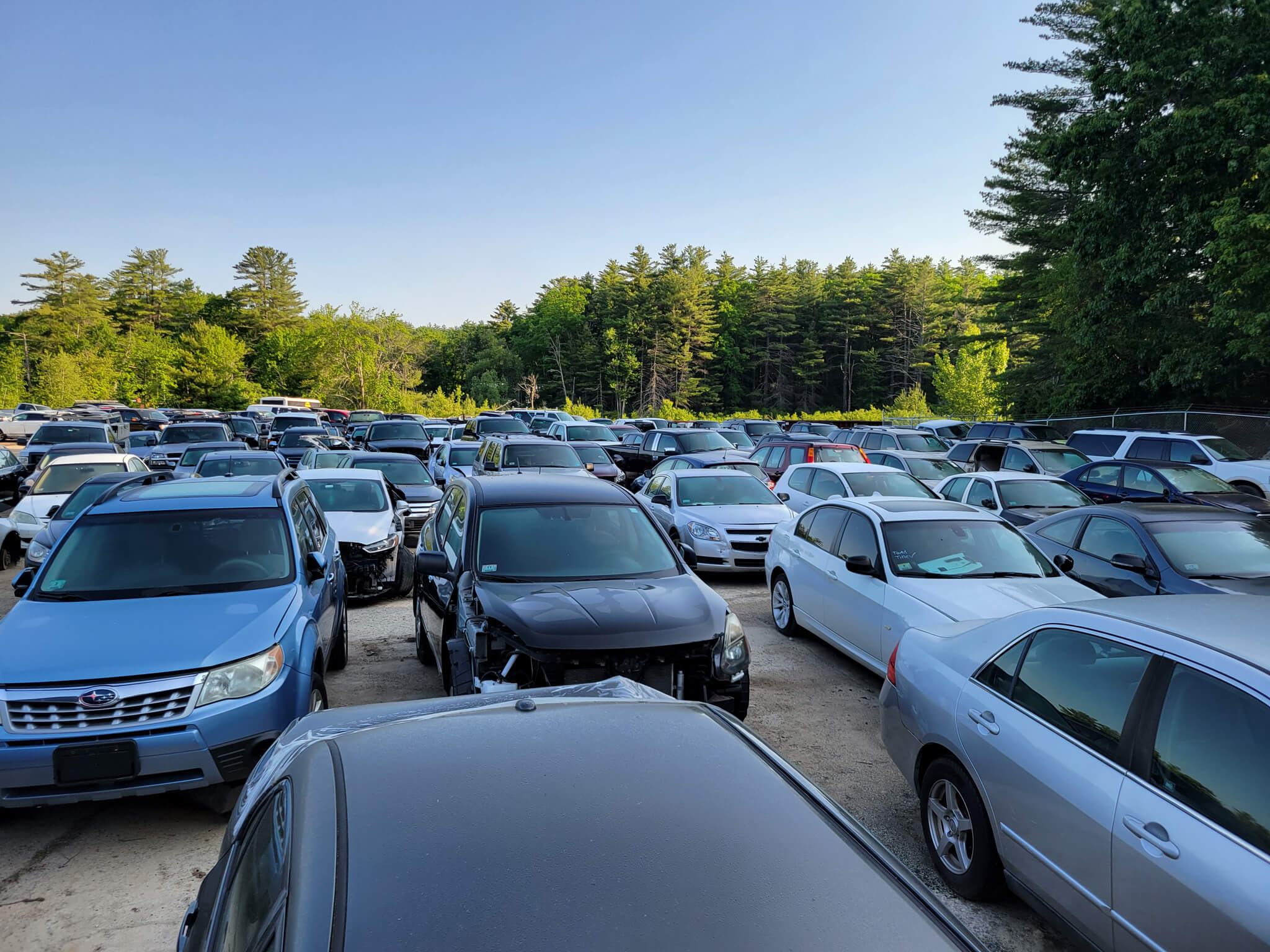
I’ll be honest with you — the first time I bought a used vehicle part, I was nervous as hell. Would it fit? Would it last more than a week? Was I just throwing money away on someone else’s problem?
That was eleven years ago. That $85 transmission I picked up from a salvage yard? It outlasted the rest of the car.
Here’s what most people don’t realize about used vehicle parts: the automotive aftermarket industry hit $395 billion in 2025, and a massive chunk of that comes from recycled and salvaged components. We’re not talking about rusty junk pulled from a field somewhere. Modern salvage operations like 603 Auto Salvage test, catalog, and warranty their inventory just like the parts counter at your dealership — minus the 400% markup.
Whether you’re keeping a daily driver running, restoring a project vehicle, or managing a fleet on a budget, used vehicle parts make financial sense that new OEM parts simply can’t match. And with online inventory systems, finding exactly what you need takes minutes instead of days.
Let’s talk numbers, because this is where the conversation gets interesting.
A brand-new OEM alternator for a 2019 Ford F-150 runs about $340-$420 at the dealership. The same alternator — same manufacturer, same part number — pulled from a low-mileage salvage vehicle costs $75-$130. That’s not a small difference. That’s grocery money for a month.
Here’s a pricing breakdown we put together based on real transactions at our yard:
| Part Category | New OEM Price | Used/Salvage Price | Average Savings |
|---|---|---|---|
| Engine (complete) | $3,500 – $7,500 | $800 – $2,200 | 65-75% |
| Transmission | $2,800 – $5,000 | $450 – $1,500 | 60-70% |
| Alternator | $280 – $450 | $55 – $140 | 65-80% |
| Starter Motor | $200 – $380 | $40 – $110 | 70-80% |
| Door Assembly | $800 – $1,800 | $150 – $450 | 70-80% |
| Radiator | $250 – $600 | $50 – $175 | 65-75% |
| ECU/Computer Module | $500 – $1,200 | $100 – $350 | 70-80% |
| Headlight Assembly | $300 – $900 | $60 – $225 | 70-80% |
Those savings add up fast, especially if you’re dealing with an older vehicle where the repair cost might exceed the car’s book value. Instead of sending a perfectly good truck to the crusher over a $4,000 transmission replacement, you spend $900 on a used unit and keep driving.
One thing worth mentioning: aftermarket parts (the non-OEM new stuff) sit somewhere in between price-wise, but they come with their own headaches. Fitment issues, questionable quality control, and warranties that sound good until you actually try to use them. Used OEM parts give you factory engineering at salvage pricing.
Not every salvage yard operates the same way, and not every used part is worth buying. After more than a decade in this business, here’s what separates a good purchase from a regret:
Check the source vehicle’s history. Reputable yards like 603 Auto Salvage track where every part comes from. A transmission from a car totaled in a rear-end collision is probably fine — the front-end components, maybe not so much. Ask about the donor vehicle. If the yard can’t tell you anything about it, walk away.
Look for warranty coverage. Any yard worth buying from offers at least a 30-day warranty on major components. We offer extended warranties on engines and transmissions because we stand behind what we sell. If a seller says “all sales final” on a $1,200 engine, that’s a red flag you can see from space.
Inspect before you buy when possible. Online ordering is convenient, but if you can physically look at a part — especially body panels, glass, and interior components — do it. Photos don’t always capture hairline cracks or subtle damage.
Verify part numbers, not just descriptions. “Fits 2015-2020 Toyota Camry” is helpful, but the actual OEM part number is what matters. Different trim levels, engine options, and production dates create variations that generic descriptions miss.
If you’re not sure what you need, reach out to our parts team — we match parts by VIN, which eliminates the guesswork entirely.
Not everything from a salvage yard is a smart buy. Here’s a realistic breakdown based on what actually works:
Best bets — buy used with confidence:
Proceed with caution:
Buy new instead:
Every used vehicle part that gets a second life is one less part that needs to be manufactured from scratch. The environmental math is staggering when you look at it:
Manufacturing a single new engine block requires roughly 2,300 pounds of raw materials and produces significant carbon emissions from mining, smelting, machining, and shipping. Reusing an existing engine? The environmental cost is basically the gas it takes to drive to the salvage yard.
The auto recycling industry recovers approximately 14 million tons of steel annually in the United States alone. That recycled steel goes back into new vehicles, construction, and manufacturing — closing the loop in ways most people never think about.
Buying used vehicle parts isn’t just a budget decision. It’s a genuinely sustainable choice that reduces waste, conserves resources, and keeps functional components out of landfills. Not that you need to put a bumper sticker on your car about it — but it’s a nice bonus.
Partners in the recycling space like 114 Auto Salvage and Rapid Cash for Junk Cars work alongside operations like ours to keep the vehicle recycling pipeline running efficiently across the region.
The used parts market has split into two distinct channels, and each has advantages depending on what you need.
In-person salvage yards work best when you want to physically inspect parts, need something immediately, or prefer to pull parts yourself (self-service yards offer the deepest discounts). You can check color matches on body panels, test electrical components, and avoid shipping costs entirely.
Online salvage inventories shine when you need a specific part for a less common vehicle, want to compare prices across multiple yards, or don’t have a local option nearby. Many yards — including our online inventory — now list parts with photos, condition ratings, and compatibility information.
A hybrid approach often works best: search online to identify what’s available and get baseline pricing, then visit locally if something shows up nearby. Platforms like Lightspeed Bid also connect buyers with salvage inventory across broader networks.
One tip from experience: if you’re ordering online and the part is heavy (engines, transmissions, axle assemblies), factor in freight costs before comparing prices. A $200 savings on the part doesn’t help if shipping adds $350.
We could talk about quality and value all day, but here’s what actual buyers have experienced:
“Needed a replacement engine for my 2017 Silverado after the original threw a rod. Dealer quoted $6,200 installed. Found a 42,000-mile engine through 603 Auto Salvage for $1,400. My mechanic installed it, total cost was under $2,800. That was eight months ago — runs perfect.” — Derek M., Concord, NH
“I manage a small delivery fleet of 12 vans. Used parts from salvage yards cut my maintenance budget by roughly 40% last year. The key is finding a yard that tests everything before selling it. 603 has been consistent.” — Patricia K., Manchester, NH
“Was trying to find a passenger door for my 2014 Civic in the right color. Honda wanted $1,900 for a new one unpainted. Got a color-matched door from the salvage yard for $225. Bolted right on. My wife couldn’t even tell which door was replaced.” — James T., Nashua, NH
“I was skeptical about buying a used transmission, honestly. But the 90-day warranty gave me confidence. Saved over $2,000 compared to rebuilt, and it shifts smoother than the one it replaced.” — Vanessa R., Derry, NH
Yes, when sourced from a reputable salvage yard that inspects and tests components before sale. Used OEM parts are manufactured to the same specifications as new ones — they’ve simply been in service. Critical safety components like brake calipers and steering parts should be carefully inspected, but the vast majority of used parts perform identically to new ones.
It depends entirely on the part’s remaining service life and the donor vehicle’s history. A used engine with 45,000 miles from a well-maintained vehicle could easily deliver another 100,000+ miles. Body panels and structural components don’t have a “lifespan” in the traditional sense — they last as long as corrosion and damage allow.
Most reputable salvage yards offer return policies, especially if a compatibility issue arises. At 603 Auto Salvage, we verify fitment by VIN before shipping and offer warranties on our parts. Always confirm the return policy before purchasing, especially from online sellers.
Quality salvage operations provide warranties ranging from 30 days to 6 months depending on the component. Engines and transmissions typically carry longer warranty periods. We recommend asking about warranty terms before buying from any source — if there’s no warranty at all, consider it a warning sign.
Under the Magnuson-Moss Warranty Act, a manufacturer cannot void your warranty simply because you used aftermarket or recycled parts. They would need to prove that the specific used part caused the failure they’re denying coverage for. That said, using quality OEM salvage parts minimizes any potential issues.
The most reliable method is matching by OEM part number rather than generic vehicle description. Providing your VIN to the salvage yard allows them to cross-reference exact compatibility. Year, make, model, trim level, and engine size all affect which parts interchange — don’t rely on “should fit” guesses.
Whether you’re tackling a weekend repair, keeping a work truck on the road, or hunting down that one discontinued piece for a restoration project, quality used vehicle parts deliver OEM reliability at a fraction of the cost.
Browse our current inventory online, or contact our parts specialists directly. Tell us your VIN and what you need — we’ll check availability, verify compatibility, and get you a quote the same day.
If you’ve got a vehicle that’s reached the end of the road, we also offer competitive cash offers for junk cars. One person’s retired ride is another person’s parts source — and that’s the beauty of the salvage cycle.
Check our FAQ page for more details, or give us a call. We’re here to help you find what you need without overpaying for it.
2004 Nissan 350Z Engine – Sports Car Performance from 603 Auto Salvage Need a **2004 Nissan 350Z engine**? 603 Auto Salvage has you covered with quality used VQ35DE V6 engines
Used 327 Engine for Sale – Classic Chevy Small Block from 603 Auto Salvage Looking for a **used 327 engine for sale**? You’ve found the right place. 603 Auto Salvage
Hernandez Auto Salvage | Professional Auto Parts & Vehicle Recycling Services Looking for reliable hernandez auto salvage services in New Hampshire? 603 Auto Salvage is your trusted partner for quality