

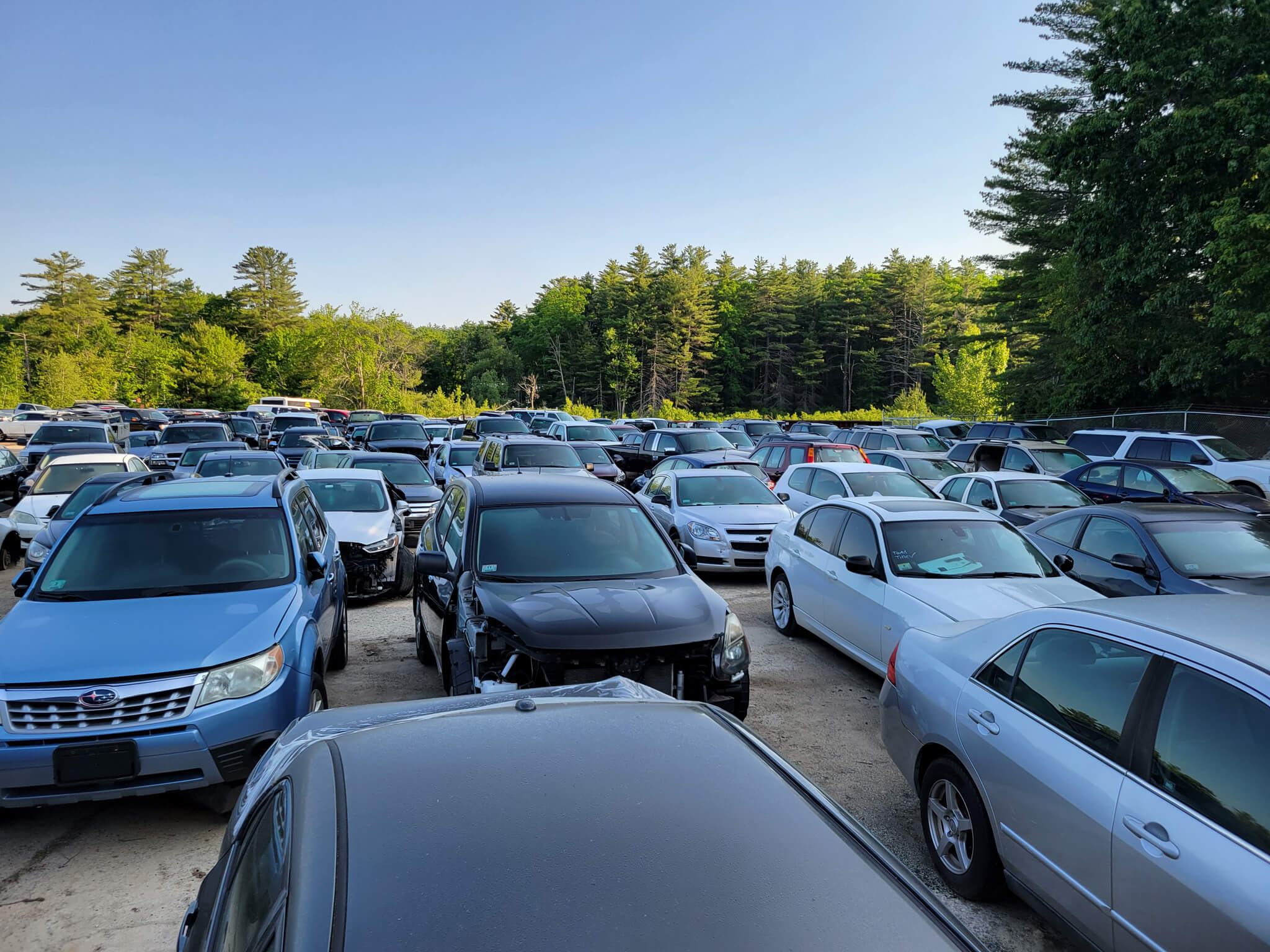
Welcome to 603 Auto Salvage, We Sell Quality Used Auto Parts at Affordable prices.
Looking for a 2.7 EcoBoost engine for sale? You have landed on one of Ford’s most impressive engineering achievements of the last decade. This twin-turbocharged V6 redefined what truck owners thought possible from a six-cylinder powerplant. When Ford announced they were putting a V6 in the F-150, traditionalists scoffed. A V6 in America’s best-selling truck? That skepticism lasted about one test drive.
The numbers tell the story. This 2.7-liter V6 produces 325 horsepower and 400 lb-ft of torque in its standard configuration. That torque figure matches or beats many naturally aspirated V8 engines while delivering significantly better fuel economy. Ford sold over a million F-150s equipped with this engine, and owners discovered something surprising: the 2.7 EcoBoost actually tows better than many expected, handles daily driving with ease, and sips fuel during highway cruising.
When your 2.7 EcoBoost fails or develops serious problems, dealership replacement quotes can exceed $8,000 including labor. For a truck with 100,000 miles on it, that math rarely works out favorably. At 603 Auto Salvage, we specialize in quality used 2.7 EcoBoost engines at prices that make keeping your F-150 on the road financially sensible. Our typical pricing ranges from $2,200 to $3,800 for tested, verified motors. Browse our current inventory on the Shop page or contact us for a VIN fitment check.
Ford introduced the 2.7 EcoBoost in the 2015 F-150 as the base EcoBoost option. Engineers in Dearborn created something genuinely innovative using a compacted graphite iron block, a material stronger and lighter than traditional cast iron. The result was a V6 that weighed less than many four-cylinder engines while handling boost pressures that would crack conventional materials.
First Generation Specifications:
Key Engineering Features:
Ford updated the 2.7 EcoBoost for the 2018 model year with meaningful improvements. Torque jumped to 400 lb-ft, making the V6 even more capable for towing and hauling. The second generation also added port fuel injection alongside direct injection, addressing carbon buildup concerns that affected some first-generation engines.
Second Generation Updates:
The 2.7 EcoBoost found homes in multiple Ford vehicles:
The F-150 application represents over 90% of 2.7 EcoBoost engines in North America. When shopping for a replacement, F-150 donor vehicles provide the most common and readily available options.
Let us cut through the confusion about 2.7 EcoBoost pricing. Costs vary dramatically depending on where you purchase:
| Source | Price Range | Shipping | Warranty | Availability |
|---|---|---|---|---|
| Ford Dealer (New Crate) | $7,500-$9,500 | Included | 3 years/36k miles | Order: 2-4 weeks |
| Ford Dealer (Reman) | $5,800-$7,200 | Included | 2 years/24k miles | Order: 1-3 weeks |
| Aftermarket Reman | $4,500-$6,000 | $300-$450 | 2-3 years | Order: 1-2 weeks |
| National Online Retailers | $3,200-$5,000 | $350-$500 | 30-90 days | Varies widely |
| Local Salvage (other yards) | $2,800-$4,200 | Pickup only | 30 days typical | Hit or miss |
| 603 Auto Salvage | $2,200-$3,800 | Pickup/Local Delivery | 30-90 days | In stock now |
Value Tier | High Mileage (100,000+ miles): $2,200-$2,800. These engines have proven reliability over significant miles. Ideal for trucks where minimizing investment makes sense, or for owners who plan to sell within a year or two.
Standard Tier | Medium Mileage (60,000-100,000 miles): $2,800-$3,400. The sweet spot for most buyers. Plenty of service life remaining at a reasonable price point. Most popular option for daily driver F-150s.
Premium Tier | Low Mileage (under 60,000 miles): $3,400-$3,800. For buyers who want maximum remaining service life. Often sourced from newer trucks totaled in accidents with minimal mechanical wear.
Consider a typical scenario: 2017 Ford F-150 with 95,000 miles needing engine replacement.
Dealership Route:
603 Auto Salvage Route:
Your savings: $3,875. That is real money that stays in your pocket or goes toward other repairs your truck needs.
The 2.7 EcoBoost is generally reliable, but certain issues have emerged across the production run. Understanding these helps you evaluate used engines intelligently:
First-generation 2.7 EcoBoost engines used direct injection exclusively, meaning fuel sprays directly into the cylinder rather than across the intake valves. Without fuel washing the valves, carbon deposits accumulate over time. Symptoms include rough idle, hesitation, misfires, and reduced power. The fix involves walnut shell blasting at a cost of $500-$800.
Second-generation engines (2018+) added port fuel injection specifically to address this issue. If you have a first-gen truck and carbon buildup caused your engine failure, consider upgrading to a second-gen engine. The fuel systems are compatible with minor modifications.
Some 2.7 EcoBoost engines have experienced timing chain stretch and tensioner wear, particularly in high-mileage examples or those subjected to extended oil change intervals. Symptoms include rattling on cold starts, check engine lights for cam/crank correlation, and in severe cases, jumped timing leading to valve damage.
We inspect timing chain condition on every 2.7 EcoBoost we intake. Engines showing signs of chain stretch or tensioner wear do not make it into our inventory. When possible, we document chain condition in our inspection notes.
The electronically controlled wastegate actuators can develop issues, causing overboosting, underboosting, or check engine lights. The actuators are part of the turbocharger assemblies. Replacement of just the actuators runs $400-$600 per side; complete turbo replacement is significantly more.
We test turbocharger operation when possible and note any wastegate concerns. Engines with confirmed turbo problems are either rejected or priced accordingly with full disclosure.
The composite oil pan on some 2.7 EcoBoost engines can develop leaks at the gasket surface. This is more common on higher-mileage examples or those exposed to road salt and debris. Replacement requires engine removal in most cases, making it a labor-intensive repair. We inspect for active leaks and note any concerns.
The belt-driven water pump can fail internally, allowing coolant to leak into the oil system. This creates the dreaded milkshake oil condition that can destroy bearings rapidly if not caught early. We test oil for coolant contamination on every engine. Any sign of contamination means automatic rejection.
When you purchase a 2.7 EcoBoost from 603 Auto Salvage, you receive a complete assembly ready for installation:
Not every engine makes it into our inventory. Here is our evaluation process:
A healthy 2.7 EcoBoost should show compression readings of 180-210 PSI across all six cylinders with no more than 10% variance between cylinders. We test whenever physically possible and document results. Low or uneven readings indicate worn rings, valve problems, or head gasket issues. Such engines do not enter our inventory.
We carefully inspect oil during intake for contamination signs:
We check both turbochargers for shaft play and listen for bearing noise. Excessive play indicates turbos nearing end of life. We also verify wastegate actuator operation where possible. Questionable turbos result in rejection or adjusted pricing with disclosure.
We evaluate all accessible components including wiring harness condition, vacuum line integrity, sensor connections, and mounting points. Accident damage affecting critical components is documented and factored into pricing.
The 2.7 EcoBoost swap is complex, involving numerous electrical connections, coolant lines, turbo plumbing, and precise alignment requirements. Professional installation typically runs $1,200-$1,800 depending on shop rates and any complications. Unless you have significant experience, proper tools, and access to service procedures, professional installation is strongly recommended.
Most qualified shops complete a 2.7 EcoBoost swap in 12-16 hours, translating to 2-3 days including diagnosis, swap, and testing. Complex situations (rusty fasteners, additional repairs discovered) can extend this timeline.
Required:
Recommended:
For the first 500 miles after installation:
How much does a 2.7 EcoBoost engine cost at 603 Auto Salvage?
Our 2.7 EcoBoost engines typically range from $2,200 to $3,800 depending on verified mileage and documented condition. Most units fall in the $2,800-$3,400 range. Call 603-392-7313 for current inventory and exact pricing.
Is the 2.7 EcoBoost reliable enough to buy used?
Yes. The 2.7 EcoBoost has proven itself across millions of miles in customer vehicles. With proper maintenance, these engines regularly exceed 200,000 miles. A quality used engine with documented history represents excellent value compared to remanufactured alternatives.
Can I put a second-gen 2.7 in my 2015-2017 F-150?
Yes, with caveats. The engines are physically compatible, but the dual fuel injection system on second-gen engines requires wiring modifications. Some owners consider this worthwhile for the added torque and carbon buildup prevention. Discuss compatibility with your installer before purchasing.
Will a 2.7 from an F-150 fit my Lincoln Aviator?
The physical engine is similar, but the Aviator uses a different tune and some different accessories. We recommend sourcing from the same platform when possible. Contact us with your VIN for specific compatibility guidance.
Does the engine come with turbos?
Yes. Our 2.7 EcoBoost engines include both turbocharger assemblies, wastegate actuators, and associated plumbing. We inspect turbos as part of our evaluation process.
What warranty comes with used 2.7 EcoBoost engines?
Most engines include 30-90 day warranty on internal mechanical components. Specific terms vary by individual engine condition and mileage. We discuss exact warranty terms clearly at purchase. Warranty covers internal engine components; installation labor and external parts are not covered.
Can I inspect the engine before buying?
Absolutely. We encourage in-person inspection. Visit during business hours to examine engines, review documentation, and ask questions. No pressure, no rush.
How do I verify the mileage is accurate?
We photograph odometers from source vehicles and retain VINs for transparency. We can provide Carfax or AutoCheck reports on donor vehicles when requested.
Ready to get your F-150 back on the road? Here is the process:
A failed engine does not mean the end of your F-150. The 2.7 EcoBoost proved skeptics wrong by delivering V8-like performance with V6 efficiency. It deserves a second chance in your truck rather than sending the whole vehicle to auction.
At 603 Auto Salvage, we provide quality used engines at prices that make financial sense. Our 2.7 EcoBoost inventory includes tested, documented units ready for immediate pickup. You save 40-60% compared to dealership alternatives with local support and transparent terms.
Do not let a dealer quote push you into years of truck payments. Do not gamble on an online retailer shipping you an unknown quantity. Come see what we have, ask your questions, and make an informed decision.
Call 603-392-7313 today to discuss your specific needs and check current 2.7 EcoBoost inventory. Your quality replacement engine is waiting at 603 Auto Salvage.
Looking for more automotive solutions? Explore our other resources: 114 Auto Salvage, LightSpeedBid, and Rapid Cash for Junk Cars for additional services and savings.
Pull Your Own Parts | DIY Auto Salvage Guide for Maximum Savings in New Hampshire Pull your own parts salvage yards revolutionize how automotive enthusiasts and budget-conscious drivers access affordable
You Pull It Auto Salvage | Self-Service Parts & Cash for Junk Cars in New Hampshire When you need quality used auto parts at affordable prices, you pull it auto